

The Other Dangers
Better Roads Staff
Don’t overlook these jobsite hazards when working near traffic.
By Lauren Heartsill Dowdle, Contributing Editor
When you work road construction zones there is never really a time to relax when it comes to safety. The job, more or less cordoned off from an ever-present public, demands safety awareness and so do the passing drivers. But when work halts, traffic doesn’t.
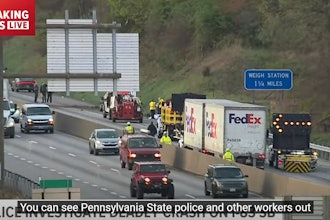
Each year, more than 20,000 workers are injured in road construction work zones, with 106 fatalities in 2010, according to the Federal Highway Administration (FHWA). Causes include (from most to least common) contact with objects or equipment; slips, trips or falls; overexertion, transportation incidents and exposure to harmful substances or environments.
Having jobs next to the motoring public is becoming even more common because a large portion of road projects are reconstruction, instead of new construction, putting crews on the sides and medians of busy streets and highways.
“When it’s a project that’s under traffic, crews need to take extra concern,” says Brian Turmail, executive director of public affairs, Associated General Contractors of America (AGC). “Being aware of cars driving in and out of the work zone can be a challenging situation for workers – making it important for the crews to know the speed limits around them.”
And if the constrained work area and extra element of dealing with cars doesn’t add enough pressure, the ever-present need to do more in less time constantly is in the front of everyone’s mind. To squeeze more into the workday, many crews are operating into and through the night to finish projects, which can limit visibility for them and drivers.
“It’s a balance,” Turmail says. “Safety should always come first – even though there’s a real emphasis on getting the jobs done quicker, which can bring up safety concerns.”
While most workers would know to enclose the work area with cones and put on reflective vests, there are some often-overlooked or downplayed situations that could quickly lead to injuries or fatalities on the jobsite. Here are six of those safety concerns to remember in road construction zones.
1 Don’t Stand Behind Trucks
A staple on road-construction project sites is the working truck. The traffic-control truck is especially common for Sterndahl Enterprises in Sun Valley, California. This full-service striping, stripe-removal and traffic-control company mostly works on reconstruction projects, making traffic safety a top concern, says Dennis “Chip” Sterndahl, president of Sterndahl Enterprises (www.sterndahl.com) and former president of the American Traffic Safety Services Association (ATSSA).
The acceptable processes, procedures, equipment and how his crews set up the equipment have evolved and improved in the past few years, Sterndahl says. One change they have made to minimize the possibility of injury is where the workers stand when they are near traffic-control equipment.
“History has shown many instances of employees picking up lane-closure signs who have been hit while standing at the back of the equipment,” Sterndahl says. “We try to avoid this by having workers stand to the side of the truck.”
The company welded the rear gates closed so no one can get the equipment off the truck from the back.
The National Institute for Occupational Safety and Health (NIOSH) reports 51 percent of worker-on-foot fatalities that occurred within a highway work zone involved backing vehicles, according to a federal government report. Emerging technologies in the field of operations include after-market devices, such as cameras and proximity detection systems. The use of spotters and internal traffic control plans can also make backing operations safer. Struck-by injuries and caught between injuries are two of the four leading causes of workplace fatalities. OSHA Integrated Management Information System (IMIS) data indicates that, between 2005 and 2010, more than 350 workers died as a result of backing incidents. While these incidents can be fatal, workers can also suffer severe, non-fatal injuries. A review of OSHA’s IMIS database found that backing incidents can result in serious injury to the back and pelvis, fractured bones, concussion, amputation and other injuries.