
RoadWorks: Privatization Report: Some Ups, Some Downs
However, preliminary data reported by the Federal Highway Administration (FHWA) show that vehicle miles traveled (VMT) in the first half of 2009 dropped by about 6.1 billion miles, about a 0.4 percent decline. On a quarterly basis, the VMT dropped by 1.7 percent during the first quarter and increased by 0.7 percent in the second quarter, according to the report.
Why the drop in fatalities? Jeff Solsby, director of public affairs for the American Road & Transportation Builders Association, says with this type of study and similar ones, there is never just one “factor” — but a combination such as, for example, a bad economy that means fewer drivers; newer, safer cars on the road; weather factors, and so on.
Lessons from the Fish and the Bees
Think about it. You never see a 10-fish pileup or even a 2-fish finder bender.
That’s because fish in a school navigate instinctively and intelligently, detecting and avoiding obstacles as a group. They recognize their surroundings based on lateral-line sense and sense of sight, and form schools with behavior rules. Nissan, using cutting-edge electronic technologies, has recreated the behavior of a school of fish in robot cars called EPOROs designed to help increase collision avoidance in groups of vehicles travelling together.
“We, in a motorized world have a lot to learn from the behavior of a school of fish in terms of each fish’s degree of freedom and safety within a school and high migration efficiency of a school itself,” said Toshiyu Andou, manager of Nissan’s MobilityLaboratory and principal engineer of the robot car project. “By sharing the surrounding information received with the group via communication, the group of EPOROs can travel safely, changing its shape as needed.”
Nissan has done something similar in the past, studying the flights of bumblebees, which tend to fly alone, to builda robot car to help make isolated drivers safer.
Road maintenance may spread invasive plants
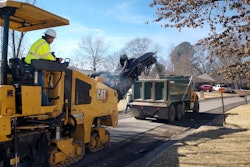
Road maintenance crews may have more of an effect on the environment than they think.
Roadsides are prime locations for the growth and distribution of invasive plant species and road maintenance, such as grading and mowing, disturbs the seedbank on a roadside according to a study. The seeds are then easily transported by water or other means. Taking steps to minimize disturbance of the road edge can provide an effective means of slowing the spread of invasive plants. The study found a greater distribution of invasive plants in proximity to forest roads which provide corridors that facilitate the dispersal of plant material.
The study was conducted in the Green Ridge State Forest in western Maryland along the Potomac River. The forest has a mix of protected natural areas, managed by The Nature Conservancy, and spaces for recreational use. The 32,000-ha area is dissected by paved and unpaved roads and trails.