


RoadWorks

Ruane also calls the Carper-Voinovich proposal “the first concrete, bipartisan proposal to finance new legislation in a fiscally responsible manner.”

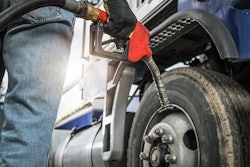
Former Transportation Secretaries Norman Mineta and Samuel Skinner, co-chairs of the Miller Center of Public Affairs’ David R. Goode National Transportation Policy Conference [see our story, page 32], say of the co-chairs’ draft recommendation: “We applaud the commission chairmen’s recognition that we cannot continue to use general taxpayer dollars to bail out the Highway Trust Fund. . . . We call for a short-term increase in the gas tax to restore our user-pays system, but ultimately America must move beyond the gas tax to a 21st-century pay-as-you-go system. . . . Unless we transition away from a tax on fossil fuel as our central funding mechanism, it will be impossible to avoid future bailouts from the General Fund.”v

John Latta

Look Ma,No Hands

Think you could drive from Italy to China? Without actually driving?

A van running without anyone actually driving, officially an “Intelligent driverless vehicle,” has driven 8,000 miles from Parma, Italy, to Shanghai. Twelve refined sensors allowed the vehicle to drive safely in very different types of traffic, weather and road conditions.

For more than three months this orange van, an “intelligent, nonpolluting vehicle, powered by green energy,” according to its handlers, made its way from Italy, across Eastern Europe, Russia, Kazakhstan, Central Asia, Siberia and into China. A sort of modern Marco Polo.

The van left Italy on July 20. It reached the Chinese border in 80 days, and then drove across the Gobi desert and on to coastal Shanghai. The experimental journey, led by Prof. Alberto Broggi, was part of a research project on autonomous driving, funded largely by the European Research Council (ERC).

Broggi from Parma University, Italy, said after the journey: “This test drive has been incredible and we’re happy we made it to the finishing line without major problems. We travelled in different environments, from hectic motorways to isolated mountain roads and desert tracks, and in rain, blizzard and strong sunlight. The van even gave a hitchhiker a driverless lift. We had to intervene manually only on limited occasions, such as in the Moscow traffic jams and when passing toll stations.”

No maps were used, partly because the van travelled across off-the-beaten-track areas in Siberia and China. The project used low-cost technologies that can relatively easily be integrated in most vehicles’ chassis, says the ERC, and could in the future help improve road safety and have a positive impact on fuel efficiency and more.

There were minor glitches. At one point, one van bumped into the vehicle ahead of it when the first one stopped. But scientists quickly found the problem. After their last stop they had forgotten to correctly turn back on the system.v

John Latta

Misleading numbers

In our November issue, we ran a story that was the result of our annual inventory of the nation’s bridges. Some of the data was misleading in the way it was presented due to an editing error that conflated Interstate and State bridge totals. FHWA bridge engineers pointed out the problem to us. They wrote:

The Better Roads article on “The State of Your Bridges” is very misleading on the status of the nation’s bridges and definitely gives the wrong impression to the public, particularly in its reference to the status of Interstate bridges. The nation’s Interstate bridges are in much better condition than the impression one gets when reading the article. The article has a number of

inaccuracies when it confuses “Total Interstate & State Bridges” with “Total Interstate Bridges.” We counted five places in the article where reference is made to

“Interstate Bridges” and it should have been “Interstate & State Bridges.” The two tables for “Highest Percentage of SD/FO Interstate Bridges” and “The Top 10 states with total number of Interstate SD/FO bridges” are incorrect and the numbers and percentages shown in the tables refer to “Total Interstate & State Bridges” and not just “Interstate bridges.”

The November digital edition of Better Roads has been corrected.

Say what?

“Our system of transportation is the greatest of any country in the world. But we must face facts. We must be realistic. We must know — and we must have the courage to let our people know — that our system is no longer adequate.”

View Full Article
comments powered by Disqus
advertisement
advertisement
advertisement