RoadWorks

Pay This Way. Pay That Way.

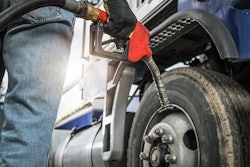
You know the argument: We need a higher gas tax fund a six-year surface transportation bill. But politicians fear for their seats and won’t do it. So we need to convince the (voting) public. To help do this process, here’s a valuable piece of ammunition from Karl Sieg, vice president of the American Society of Civil Engineers’ Pittsburgh section.

Using various data Mr. Sieg points out that the cost of damage to vehicles from bad roads is somewhere between $300 and $400 a year. It may even be as much as $750, he says.

Add 25 cents a gallon to the state gasoline tax and you raise more than $1.5 billion, a sum that could do a vast amount of good in stopping roads from deteriorating or repairing ones already crumbling and, of course, damaging cars. For a driver who goes 15,000 miles a year at 25 miles per gallon, the annual cost would be $150, he told the Pittsburgh Post-Gazette.

“In other words, for less than half what we pay each year to repair the damage to our cars caused by worn-out roads, we could fix the roads,” he said. “Kind of a no-brainer, isn’t it?”

My pickup won’t get anywhere near 25 mpg, but I would still come out ahead according to Mr. Stieg’s formula.v

- John Latta

An award-winning year

Better Roads has won six regional awards from the American Society of Business Publication Editors (ASBPE), including one gold, one silver and three bronze, honoring both editorial and design work done last year.

PA Turnpike: “We’re #1”

Should PA be PAY?

Under toll increases set to take effect Jan. 2, the Pennsylvania Turnpike will become the most expensive long toll road in the nation. With a 10-percent hike for cash customers, the out-of-pocket cost of driving the length of the turnpike rises to 8.5 cents per mile, highest among 11 U.S. toll roads of 100 miles or more. Currently, the Pennsylvania and New Jersey turnpikes are tied at 7.7 cents per mile.

Key to the Pennsylvania Turnpike climbing to the top of the toll mountain is a 2007 state law that requires it to help fund non-turnpike transportation programs.

Users of the E-ZPass electronic fare collection system do get a break – their 2011 increase is held to three percent.

Fuel Taxes and a Governor’s Race

Fuel taxes have become an issue in the Idaho governor’s race.

While a task force works on transportation funding issues for a post-election report, one candidate has jumped on its preliminary findings.

Democrat Keith Allred says, “Car and pickup truck drivers have been subsidizing the heavy trucking industry.” He proposes cutting the gas tax for motorists, with heavy trucks paying a significantly larger share. Governor C.L. Otter, a Republican, replied, ““I can understand wanting to have the perfect solution in a campaign cycle, but the bottom line is the task force has not completed its work. We need to respect its bipartisan process.”

This preliminary report of the 2010 Idaho Highway Cost Allocation Study (HCAS) examined the equity of Idaho’s highway user tax structure to determine the fair share of costs that each road user class should pay through highway user taxes and fees for the construction, maintenance, operations, and related costs of highways, roads, and bridges in a state.

Key findings include:

When state and federal programs are combined, collections from automobiles now exceed cost responsibility by 47 percent, while payments from combination trucks now fall 33 percent short of cost responsibility.

View Full Article
comments powered by Disqus
advertisement
advertisement
advertisement