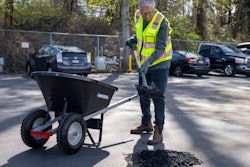




Roadworks
Better Roads Staff
The latest [at press time] Associated General Contractors of America report (using federal employment data) on employment in the construction shows 5,000 jobs were added in April while the industry’s unemployment rate declined slightly to 17.8 percent, nearly twice the national average. Association officials say the figures continue a year-long trend of little change in construction employment after years of steep declines and predicted “the stagnation is unlikely to change soon.”
“The construction industry may have stopped bleeding jobs, but there is no sign that employment levels are set to bounce back,” says Ken Simonson, the association’s chief economist. “With declines in public sector investments likely to offset increases in some private-sector construction activity, we are unlikely to see significant increases in construction employment for the foreseeable future.”
According to Stephen E. Sandherr, the association’s chief executive officer, “Construction will keep suffering double-digit unemployment rates as long as federal officials continue to cut infrastructure maintenance and upkeep instead of addressing out-of-control entitlement spending. The lesson here is you can’t neglect your way to greater economic prosperity.”
Hiccup or Heart Attack?
The American Institute of Architect’s Architecture Billings Index (ABI) fell sharply in April. AIA says it’s the first slowdown in billings at architecture firms since last October. “Business conditions at architecture firms had been slowly improving for the past few months, so it remains unclear if this month’s [April] downturn is a bump in the road to recovery, or indicative of a longer-term reversal in the two-quarter recovery in design activity.”
Stimulus Impact? Not Really Sure.
There seems to be in Washington – and in the industry – a sense that the Stimulus was a lifeline, a success. How much impact did it have, will it have? We don’t know exactly, and neither does the DOT.
The Stimulus (The American Recovery and Reinvestment Act of 2009) provided $48 billion to the U.S. DOT to fund transportation work. By the end of March, more than 95 percent of it had been obligated to more than 15,000 projects, and the funds are paying for ongoing work.
But in a new report, the Government Accountability Office (GAO) says the reality is, “the impact of Recovery Act investments in transportation is unknown.” GAO does say that Stimulus transportation projects supported about 50,000 full-time job equivalents in the last three months of last year and that the most recent data shows that “highway projects accounted for about two-thirds of the transportation FTEs reported.” But GAO is recommending that DOT find out just which numbers and other data are needed to assess the impact the money had made, and the agency points out that DOT “has not committed to assessing the long-term benefits” of the Stimulus’s transportation funding.
SAY WHAT?
“So what are we going to build? Are we going to keep cutting everything? Then Americans are going to turn around and say, why doesn’t this work, why doesn’t my school work, why can’t we fill the potholes? I mean it’s just crazy, honestly. It really is crazy. We’re in a crazy place right now.”
U.S. Sen. John Kerry (D-MA)
Ranking the Trashiest States
Kentucky ranked the worst in public-property litter removal efforts, and Washington state best, according to the 2011 American State Litter Scorecard presented at the American Society for Public Administration’s national conference. Each year, more than 800 Americans die in debris/litter-attributed vehicle accidents, according to the Scorecard.
MORE FROM In the Magazine
MORE STORIES
POPULAR
COLUMNS
BLOGS
- MoDOT employs robot to mow roadside grass1544 Views
- CDOT “Slow for the Cone Zone” ads depict kids as construction workers451 Views
- USDOT to release $15.6 million for I-5 bridge436 Views
- 25 percent of U.S. bridges classified as deficient in 2012392 Views
- Private money: A funding wildcard in 2014285 Views