

RoadScience

5.1-cubic-yard hopper, and keeps the material at a consistent temperature throughout the day.

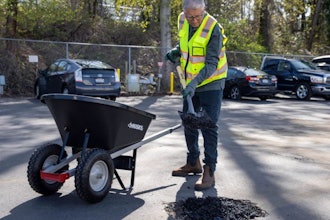
In addition, Graves and his crew use the tools on the unit to follow a process for most potholes. The damaged pothole area is squared off using an attached hydraulically-driven pavement breaker. The old material is then removed and placed into one of the spoils bins, located on the side and rear of the truck so workers can safely stay out of traffic’s way.

The combination compressed air and tack coat wand blows the remaining debris out of the pothole. The same self-cleaning wand then applies the warm tack coat. The ability to dispense warm tack coat in any weather condition has been a huge factor in prolonging the life of Irondequoit’s repairs.

An auger dispenses material onto the swivel material chute, which delivers the fresh, hot asphalt to the prepared area. The chute slews left or right, allowing for multiple pothole and shoulder repairs from one location. Finally, a hand-operated plate compactor – or single-drum roller – will vibrate and compact the material flush with the existing pavement.

Graves estimates he is saving up to 10 man-hours some weeks producing new patches, instead of performing repetitive repairs. The town has also lowered material costs. With the propane-operated pothole patcher, the town was unable to productively use approximately 10 percent of the hot asphalt material purchased per week. At an average of $67 per ton last year, the town saved approximately $200 per week.

In addition, by making fewer trips to the asphalt plant, the town saves on diesel fuel costs, wear and tear on the equipment and has increased on-the-job productivity. And Graves doesn’t have to worry about purchasing costly heating oil or propane anymore. He just turns the unit on and the onboard hydraulic-powered AC generator provides power to the full-length electric-heating elements. The elements produce a consistent heat from the front to the back of the patcher, eliminating hot spots and the need for heating oil.

Infrared Offers Option

A different approach to permanent patch repairs is the infrared option. Distressed pavement surface repairs – such as potholes, alligator cracking, bird baths, high spots, pavement seams, manhole covers or failed repairs – may be effectively fixed using the infrared process.

Seamless infrared asphalt repairs are achieved by using specialized equipment to heat the existing asphalt surface to a depth of up to 3 inches. New hot mix asphalt is then mixed with the existing asphalt, forming not a patch, but a seamless repair that is thermally bonded to the surrounding asphalt. After a slurry or chip seal, the repair likely will not be detectable.

The seamless repair will resist water intrusion, can be performed in any weather conditions or temperatures, and can be opened to traffic in an hour or less in most cases.

After a repair area is cleared of broken and raveled asphalt, an infrared heater is positioned over the repair area, which is then exposed for up to 10 minutes. After the asphalt is softened – but not scorched – a lute or rake is used to define the outer edges of the patch. At least 6 inches of the heated surface should remain undisturbed around the outside edge of the patch, contractors say. The rake is then used to scarify the inside of the hot patch area and an asphalt rejuvenator is mixed with the raked, aged asphalt.

Then, fresh virgin asphalt is added to the site to bring the repair up to grade. The patch is then leveled with a lute and the area around the repair is swept clean. Compaction flush with the surface completes the infrared repair.

Concrete Pavement Repairs

Spalled concrete caused by fatigue, freeze/thaw cycles, warping stress, ingress of water, or substrate problems can lead to costly reconstruction, and repairs require a different approach than with flexible pavements. But patching of portland cement concrete (AC) pavements with conventional PCC – with its long cure times and lane closures – can cause excruciating user delays, whether on an expressway or airport runway.

As conventional rigid cement repairs – such as epoxies or fast-curing cementitious products – often fail due to de-bonding, fatigue and differential expansion characteristics, additional cracking and the need for repeated repairs may occur. Instead, a variety of high-performance concrete patch materials provides quick repairs that not only cure very fast, but solve long-term patch durability issues.

For example, TechCrete from Crafco provides a long-term solution for distressed concrete pavement preservation, the maker states. It’s a hot-pour repair solution which provides flexibility, high-tensile strength, the ability to bridge joints, and high compressive resistance, the maker says.

View Full Article
comments powered by Disqus
advertisement
advertisement
advertisement