


Road Science Tutorial

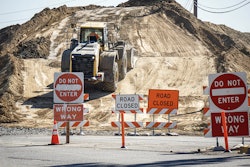
A precast, prestressed panel is placed on I-287 ramp in New Jersey.

The project’s technologies, algorithms and methods have been tested in physical test beds in laboratories and now are being implemented on a mid-size steel bridge near Ft. Lauderdale, Fla., with support from the Florida DOT, District 4. This one-year demonstration under real-world conditions will allow investigators to evaluate and refine the framework under a full annual cycle of weather and traffic conditions.

It’s hoped the research will lead to significant cost-efficiencies in managing transportation structures, while also reducing the cost of information processing and analysis through automated data collection and evaluation processes. And in pursuit of the goals of FHWA’s Highways for Life program, the structural health monitoring framework should advance performance-based condition assessment of transportation infrastructure in general, and superstructures in particular.

GPR for Superstructures

The same radar technology used in mobile applications to conduct real-time, nondestructive analysis of pavements below their surface also is used to survey the condition of bridge decks.

Such electronic analysis replaces the time-honored, acoustic chain-drag process in which hand-held chains are bounced against the surface of the deck, and the users listen for a dull sound where voids exist, which are marked on graph paper. While effective, that process is strictly subjective and lacks the precision that modern bridge and pavement management systems require. For example Geophysical Survey Systems, Inc.’s BridgeScan is a GPR system designed specifically for bridge condition assessment and analysis, and for accurately determining concrete cover over rebar on new structures.

BridgeScan results are provided in a simple ASCII file format for simple integration with a variety of programs. Results also automatically accommodate for the bridge skew angle, which provides for an accurate representation of the bridge data.

Such systems are used for bridge deck condition assessment, measurement of the thickness of the bridge deck, determination of concrete cover depth on new structures, location of metallic and non-metallic targets, and detection of voids.

Prefabricated Units

The use of prefabricated bridge components now goes beyond simple precast, prestressed, post-tensioned I-beams and box girders, to complete deck systems which are placed by crane – often at night, as traffic must be halted on the pavements beneath – and which are speeding bridge reconstructions across the country.

Whether made of high-strength concrete, or glass or carbon fiber-reinforced polymer configurations, prefabricated bridge elements and systems offer advantages for the owning agency, says FHWA. They may be manufactured on-site or off-site, under controlled conditions, and brought to the job location ready to install according to FHWA.

Prefab components are a good idea, according to FHWA’s Highways for Life program. They may be of better quality because they are plant-cast in a controlled environment; they permit better inspection of materials and finished product before being incorporated into the project; their use minimizes disruptions to the traveling public; they greatly reduce the time of construction; they contribute to a safer work environment; they have less of an impact on the environment; and they are cost-effective as more is done with less.

“Traffic and environmental impacts are reduced, constructability is increased, and safety is improved because work is moved out of the right-of-way to a remote site, minimizing the need for lane closures, detours and use of narrow lanes,” FHWA says.

“Prefabrication of bridge elements and systems can be accomplished in a controlled environment without concern for jobsite limitations, which increases quality and can lower costs,” FHWA adds. “Prefabricated bridge elements especially tend to reduce costs where use of sophisticated techniques would be needed for cast-in-place, such as long water crossings or higher structures like multi-level interchanges.”

View Full Article
comments powered by Disqus
advertisement
advertisement
advertisement