



Road Science: Top 5 Trends of 2010

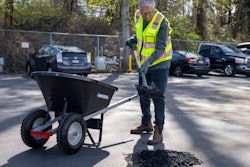
Based on research sponsored by the Alabama Department of Transportation and others, revised structural coefficient of hot mix asphalt will enable thinner lifts of asphalt without sacrificing strength, making state and local road bridges go farther. Photo courtesy of Tom Kuennen
New research refining or “recalibrating” the structural coefficient of asphalt layers is letting the Alabama DOT decrease its hot mix asphalt overlay thicknesses by nearly 19 percent. The new data allow the DOT to place thinner asphalt pavements with the same load-carrying performance as its existing design, allowing more square yards of asphalt pavement to be placed within the same budget, beginning in 2010.
The effect will be more lane miles of asphalt overlay in the state placed with the same budget, and the benefits will apply to other states, counties and cities as well.
The new research from the National Center for Asphalt Technology (NCAT) at Auburn University in Alabama, Recalibration of the Asphalt Layer Coefficient, by Kendra Peters-Davis and Dr. David H. Timm, P.E., was published in August and establishes that in the age of Superpave and other advanced pavement designs, current asphalt layers are stronger structurally than layers used during the AASHO Road Tests of 1958-1960.
One of the main parameters in an asphalt pavement design system is the asphalt layer structural coefficient. The structural coefficient is an index that expresses the structural contribution of the asphalt layer(s) relative to all the other layers.
Based on research from the 1956 AASHO Road Tests, the existing asphalt layer structural layer coefficient value used by Alabama and many other states has been 0.44. The new research incorporates actual performance of modern materials and designs at the National Center for Asphalt Technology (NCAT) Test Track at Auburn University, and has resulted in a new structural layer coefficient value of 0.54.
From a practical standpoint, this permits a thinning of a pavement by about 18.5 percent while still getting the same load-bearing performance as before. Beginning next year, the resulting savings will be used to expand Alabama’s overlay program by a like amount.
“In our recent NCAT test sections, we evaluated the structural layer coefficient that we used in our existing design procedure,” said Mike Harper, P.E., assistant chief engineer for operations, Alabama DOT. “The result of the study was the recommendation that we could comfortably go from 0.44 to 0.54 with our structural layer coefficient in our design procedure. That means, for most of our new pavements, an 18 percent reduction in the total build-up, and an 18 percent reduction in overlay thickness for existing asphalt pavements, which is a tremendous savings for us. We will use that savings to pave more miles.”
The Alabama DOT will implement the new pavement value in its road program in its 2010 budget. As the new fiscal year started Oct. 1, this means that the state will benefit from the road cost savings almost immediately.
“Our resurfacing budget is approved each year,” said Larry Lockett, P.E., state materials and tests engineer, Alabama DOT. “This means that our resurfacing budget will go 18 percent farther than it has in the past. We will be able to pave more roads, more lanes, more miles, because of this 18 percent saving.”
As the economic stimulus package provided about a 40- to 50-percent increase in Alabama’s resurfacing program throughout two years, this 18 percent savings will further leverage those funds to benefit Alabama’s roads and economy.
The research will be publicized by the National Asphalt Pavement Association in the January/February 2010 issue of HMAT Magazine, and the actual NCAT report is available online. To download NCAT Report 09-03, Recalibration of the Asphalt Layer Coefficient, visit www.eng.auburn.edu/center/ncat/reports/rep09-03.pdf.
3. Electricity can be generated by road traffic
In early October, Israeli scientists announced they had achieved a breakthrough in alternative energy, by generating electricity from road traffic. The technology was developed by Innowwattech Ltd., and Israel National Roads Company Ltd. and the Technion Israel Institute of Technology participated in the trial.
The trial proved, for the first time in the world, how electricity can be obtained from generators installed beneath a road’s asphalt layer. Following a successful trial on a short section, the research it will be expanded to several 1 kilometer stretches of one of Israel’s main north-south traffic arteries.
MORE FROM Featured Articles
MORE STORIES
POPULAR
COLUMNS
BLOGS
- Rand Paul introduces bill to fund emergency transportation projects475 Views
- Sydney uses water curtains to alert drivers to stop (VIDEO)461 Views
- Tesla Model S earns top ratings from Consumer Reports428 Views
- Big four cellphone companies jointly launch anti-texting campaign261 Views
- Acceptance of connected vehicles depends on cost, LaHood says256 Views