

Road Science: Thin is In

Road-science-main

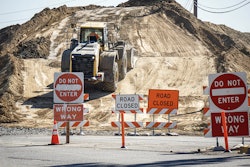
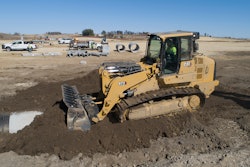
In Michigan in 2005, thin lift hot-mix asphalt awaits compaction on U.S. Route 127.

Thin lift hot-mix asphalt overlays are securing their place in the ‘pavement preservation toolbox’ touted by the Federal Highway Administration, the Foundation for Pavement Preservation, and other groups.

And while they are more expensive in initial costs than other proven pavement preservation surface treatments, such as micro surfacing or chip seals, proponents argue that they provide increased smoothness and a quieter ride than other surface treatments in the short term, and more durability due to slight structural enhancement to the pavement in the long term.

“Most thin treatments only address surface distress [and] do not improve ride quality,” said Jim Huddleston, P.E., executive director, Asphalt Pavement Association of Oregon, at the Northwest Pavement Management Conference in October 2009.

Thin HMA overlays are preferable to other preventive surface treatments because they do everything traditional seals do, Huddleston said, including sealing and preserving the pavement, and restoring skid resistance while improving ride and effectively eliminating rutting.

He added they have low [but not the lowest] initial costs, and low life-cycle costs, have low-performance risk, provide minimal road user delays, and add structural strength to the road.

As surveys indicate that ride quality is what is most important to drivers, Huddleston said, thin HMA lifts will please road patrons more because they significantly improve ride quality, while chip and slurry seals only slightly improve ride quality.

While thin HMA overlays have the highest initial cost, however moderate compared to conventional lifts, the lowest-cost alternate is the old-fashioned chip seal.

“The popularity of chip seals is a direct result of their low initial costs in comparison with thin asphalt overlays and other factors influencing treatment selection where the structural capacity of the existing pavement is sufficient to sustain its existing loads,” says Douglas D. Gransberg, P.E., University of Oklahoma, in his 2005 Transportation Research Board paper, Chip Seal Program Excellence in the United States.

“Thin and ultra-thin asphalt overlays have performance advantages compared to other preventive maintenance treatments,” Huddleston said. “Initial costs are only slightly higher, and life-cycle costs will clearly save agencies money and extend limited budgets.”

Long-lasting driving surfaces

Thin (3/4- to 1-1/2-inch thickness) overlays of hot-mix asphalt usually are intended to address problems of surface roughness, rutting, and surface cracking.

Typically, a thin asphalt overlay will be a 3/8-inch NMAS mix, using performance-grade binder, placed 1- to 1.5-inch thick. An ultra-thin asphalt overlay will be a slightly finer-graded mix placed 0.6- to 1-inch in depth.

View Full Article
comments powered by Disqus
advertisement
advertisement
advertisement