

Road Science

Better Roads Staff

Using a unique portable instrument and a variety of dust-control palliatives, they are helping the state compare which dust treatments are the best for specific unpaved road and runway locations throughout the state.

The instrument, the DUSTM, monitors palliatives on gravel airports and roads in over 30 remote Alaska communities. When deployed, it mounts on the rear of an ATV to measure loftable dust levels (defined by the EPA as PM 10). An air intake extends from the unit off the back of an ATV and pulls a continuous air stream as the ATV drives at specific speeds over a surface. As dust emerges, the air stream is pulled through a tube and passes by a laser, which measures the opacity of the airstream. This data is then recorded in an on-board datalogger box, which can be analyzed later. Early results show various palliatives reduce dust from 65 to 99 percent.

‘Gravel Roads Academy’

An outreach program – the Gravel Roads Academy – teaches how to both provide optimal gravel road conditions for local drivers, and optimize shrinking budgets.

Launched in 2012 by the makers of DustGard – a road stabilization and dust control product – the Gravel Roads Academy trained road engineers and maintenance crews in 16 states to build and maintain gravel roads for greater cost savings, superior stabilization and improved air quality.

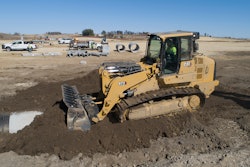
Held from March through October, the free Gravel Roads Academy engaged “gravel gurus” to teach city, county and state road professionals the most efficient unpaved road construction and maintenance techniques, including the regular (usually annual) application of a road stabilizer and dust control product.

Each 1 ½-day session included a field demonstration of motor grading techniques and stabilization, and taught best practices in design, maintenance, stabilization, resource management, air quality and funding options. Approximately 35 sessions will be conducted in 2013. For more information, visit www.gravelroadsacademy.com.

When Paved Roads Go Bad

The potential of road agencies letting a paved road deteriorate to unpaved status has achieved notoriety in our age of diminished agency budgets. Whether and how to let a road “unpave” was explored in February 2012 at the 16th Annual TERRA Pavement Conference at the University of Minnesota-St. Paul.

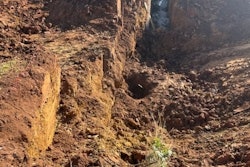
There, Freeborn County, Minn., engineer Sue Miller described the unpaving of County Road 20, which was so far gone that county repair trucks were destroying the surface as they attempted to repair it. Unpave a road with trepidation, she warned, and, as she said “Make sure you don’t take a bad bituminous surfaced road and make it into a terrible gravel road.”

County Road 20 was disintegrating, but was not scheduled for any type of major maintenance until 2015. “We had to unpave it, reclaim the useless broken asphalt, and revert to a gravel-surfaced road until we had time to consider alternatives to traditional paving and find the required funding,” she said, as quoted by Richard Kronick in the Spring 2012 Minnesota LTAP newsletter.

When Miller used the word “unpave” in a county board meeting, she discovered that it was loaded with negative connotations, Kronick writes. “For some of my county commissioners, the word unpave means loss of service. It means we’ve failed. No one wants to tell constituents that the level of service they expect can’t be delivered. In fact, I was told not ever to use that word again!”

The dean of gravel road maintenance, South Dakota Local Technical Assistance Program’s Ken Skorseth, said removing asphalt and reverting to a gravel surface may only lead to different types of problems, Kronick reported. “If the truck traffic is 25 to 50 ADT and there is low subgrade support, you will need 14.5 inches of gravel,” Skorseth said. “That’s hard to do when trucks are knocking it off constantly and the blade needs to be out there every other day. Furthermore, the quality and availability of gravel varies greatly from place to place.”

Unpaving, or reversion of a paved road to gravel, is not widespread. The most current overview will be found in the June 2010 research synthesis, Decision Tree for Unpaving Roads. Download the report – which includes state and local agency experience – at www.lrrb.org/media/reports/trs1007.pdf.


View Full Article

MORE ABOUT Featured Articles

comments powered by Disqus
advertisement
advertisement
advertisement