


Road Science
Better Roads Staff
Preserving the Unpaved Road
‘Gravel,’ stone-surfaced and dirt road preservation helped by new techniques, guidelines, RAP
By Tom Kuennen, Contributing Editor

A clogged corrugated drainpipe under this Texas road results in water flowing across it, eroding the surface and creating a ford in wet weather.
If you don’t drive them often, it’s easy to overlook unpaved roads. After all, they carry significantly less traffic than rigid or flexible pavements in areas where most people don’t live. Typically, unpaved roads carry less than 150 vehicles per day, and those vehicles tend not to put excess stress on the road structure. That is, unless it’s during harvest time, when a limited number of overloaded trucks put very heavy loads on these dirt and gravel surfacings.
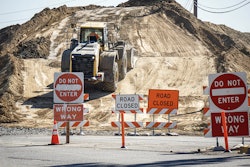
Unpaved roads aren’t limited to rural areas. In December 2012 the residents of Ft. Lauderdale’s South Middle River neighborhood – located off the busy Andrews Avenue corridor, just blocks from downtown Fort Lauderdale, Fla. – demonstrated for reconstruction of their dirt streets by removing road construction signage from an adjacent work zone and using it to direct motorists down their dirt street. The demonstration continued for 40 minutes before police broke up the gathering, reported the Ft. Lauderdale SunSentinel.
In recent years, declining road funds, rising traffic and loads have combined with natural calamities like floods to stress the nation’s unpaved roads. Significantly, the boom in fossil fuel extraction of oil, oil sands and natural gas from states from Pennsylvania to Texas to Wyoming, and in Canada’s western provinces, has put new stresses on unpaved roads as they carry construction equipment inbound, and extracted resources outbound. Fortunately this new boom is providing a fresh stream of tax revenue for road repair.
Even the boomlet in windmill-powered electricity generation has stressed unpaved roads. Often, access to agricultural areas where wind farms are located is entirely via unpaved roads, which suffer under heavy traffic from 50,000-pound concrete mixers, and trucks hauling 800-ton cranes.
Unpaved Road Preservation
While preservation of asphalt and concrete pavements has become quite technically advanced, preservation of unpaved gravel, stone or dirt roads is still at the maintenance stage, in which preservation is defined as preventive maintenance.
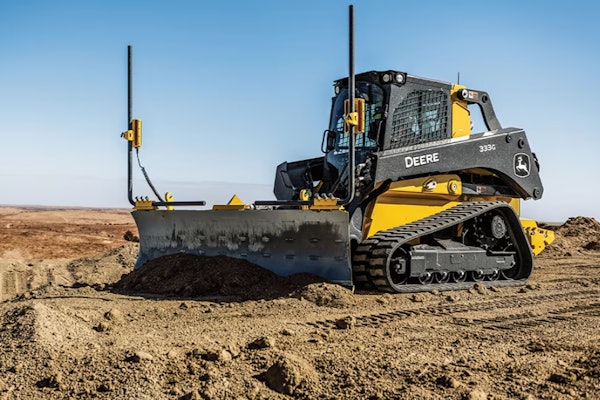
South Dakota has articulated a checklist for preservation of its many miles of gravel roads. Blading and graveling of mainline roadways and shoulders are effective at reshaping or replacing granular material lost on the surface of either a roadway or shoulder, the SD DOT says.
“Graveling of mainline or shoulders involves shaping of the surface and a periodic addition of granular material to provide a smooth driving surface or shoulder that has a proper crown slope and is free of ruts and distortions,” it maintains. Deficiencies include:
• Rutting and shoving of material. Wheel motion of the traffic will shove material to the outside (as well as in-between traveled lanes), leading to rutting, reduced water-runoff, and eventual road destruction if unchecked, the state says. As long as the process is interrupted early enough, simple blading is sufficient, with material being shaped to correct the deficiencies.
• Washboarding. Washboarding is the formation of corrugations across the surface at right angles to the direction of travel. They can become severe enough to cause vibration in vehicles so that bolts loosen or cracks form in components, the DOT says. Blading performed under the correct moisture conditions will aid in removing the corrugations, and the addition of a good quality gravel can help prevent them reforming.
MORE FROM Featured Articles
MORE STORIES
POPULAR
COLUMNS
BLOGS
- Obama signs memorandum to expedite infrastructure projects669 Views
- Sydney uses water curtains to alert drivers to stop (VIDEO)394 Views
- Florida’s Red Light Camera Game: G R E E N orange R E D383 Views
- Seattle tests bikes as disaster relief (VIDEO)380 Views
- FHWA deploys bridge-inspecting robots296 Views