



Outlook 2013
Better Roads Staff
Funds, Funds, Funds
• Agencies intend to take advantage of MAP-21 reforms and also look to more private financing options.
• Contractors say infrastructure damage will keep getting worse as funding remains inadequate.
By John Latta, Editor-in-Chief
At a time when economists and other seers are reporting signs of optimism for 2013, kickstarted in the second half of the year by the private sector, Better Roads’ December survey of both our contractor and agency readers shows a resilient industry that, on both sides of the aisle, sees funding as the major problem facing us in 2013.
Our numbers come from a national survey, but it is likely some of them include regional aberrations because some states, or some parts of some states, defy national trends.
I would note also that our survey was done in early December, and this issue went to press in late December before the so-called “fiscal cliff” deadlines hit. Clearly any deals addressing tax rates and spending cuts will be a significant factor in 2013, delivering either a minor or major drag to growth.
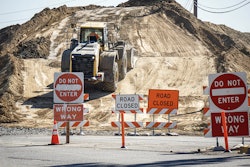
One of the most disturbing answers in the survey comes from contractors in response to the question: “Are you seeing, or do you expect to see, increasing deterioration of transportation infrastructure because of the lack of funding for essential repair work?” Among respondents, 86.4 percent say “yes.”
Our survey shows that inadequate funding remains the No.1 problem.
State agency respondents mostly (60.2 percent) expect funding levels to be the same in 2013 as they were in 2012, a disappointing number for everyone who expected reauthorization to unlock funding floodgates, or at least boost the figure year over year. However, states that expect to see more funding totaled 20.3 percent.
On the other hand, a very high 73.7 percent of agency respondents say they would look to use more private financing in 2013.
More contractors surveyed (45.5 percent) say they expect the amount of work put up for bid in their state to remain about the same than see an increase (28.8 percent, still a promising number) or decrease (25.8 percent). Among agencies, exactly half (50 percent) expect the amount of work to remain the same, but encouragingly 31.4 percent see an increase with only 18.6 percent expecting a decrease.
The survey also shows that a lot of contractors expect change in the sort of work available to them from agencies, with 40.9 percent expecting the makeup of the work coming from their state to change, with more of some sort of work and less of others. Among state agencies, 61.9 percent of respondents do not expect changes in work makeup. But many states (43.2 percent) expect to take advantage of increased flexibility in how they spend federal funds offered them under the new MAP-21 surface transportation legislation, something that may change the sort of work and projects that they prioritize. That of course depends on how well and how fast the MAP-21 reforms are implemented.
The survey also suggests that contractors have already made strategic changes to deal with the post-recession’s slow climb-out as almost three-quarters of them (74.2 percent) see no need to move into new or out of old fields in which they have operated to bring in work.
Also encouragingly, 43.9 percent of contractors expect to bring in new equipment in 2013, and 37.9 percent of it will be bought, 15.2 percent rented and 13.6 percent leased. Agency respondents overwhelmingly (75.4 percent) say they expect their equipment fleets to stay about the same size.
MORE FROM eRoadPro Newsletter
MORE STORIES
POPULAR
COLUMNS
BLOGS
- Sydney uses water curtains to alert drivers to stop (VIDEO)816 Views
- Obama signs memorandum to expedite infrastructure projects652 Views
- Florida’s Red Light Camera Game: G R E E N orange R E D399 Views
- FHWA deploys bridge-inspecting robots297 Views
- Fifty cents on the dollar for Illinois roads274 Views