

New Jersey DOT kicks off National Work Zone Awareness Week
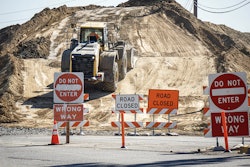
Commissioner James Simpson kicked off New Jersey Department of Transportation’s (NJDOT) participation in National Work Zone Awareness Week today, urging motorists to contribute to a safe highway construction season by taking it slow through work zones.
“We can all help drive down the number of accidents and injuries to motorists and construction workers by paying extra attention to the bright orange signs which alert us of upcoming work zones, and by traveling through construction areas in a slow and safe manner,” Simpson said.
Similar messages are being delivered by transportation officials nationwide as the highway construction season shifts into high gear with the coming of warmer weather. With as many as 200 highway and bridge projects under way at any given time in New Jersey, motorists travel through work zones quite often.
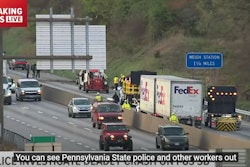
“Every work zone, from relatively simple ones to those that involve lane shifts or merging traffic, offer an opportunity for drivers to help keep the zone safe,” said NJDOT Deputy Commissioner Joseph Mrozek, who this morning announced Work Zone Awareness Week with New Jersey Motor Vehicles Commission Chief Administrator Raymond Martinez at an active work zone along Route 1 in North Brunswick.
“We educate and test new drivers on the importance of recognizing work zone signs and responding appropriately, but work zone safety is everyone’s responsibility, from the teenager with a learner’s permit to those with decades of experience behind the wheel,” Martinez said. “Don’t allow yourself to be distracted while approaching or traveling through a work zone.”
In coordination with the New Jersey Turnpike Authority, the South Jersey Transportation Authority and the Port Authority of New York and New Jersey, NJDOT is displaying a special safety message on Variable Message Signs reading, “Safer Driving, Safer Work Zones, For Everyone.”
NJDOT is working with the New Jersey Institute of Technology and Rutgers University on a study to identify whether work-zone accidents tend to occur prior to the zone, within it or as vehicles emerge from the zone.
Study data will help drive strategies and investment decisions to help reduce work zone accidents and injuries.
MORE FROM eRoadPro Newsletter
MORE STORIES
POPULAR
COLUMNS
BLOGS
- Obama signs memorandum to expedite infrastructure projects663 Views
- Sydney uses water curtains to alert drivers to stop (VIDEO)391 Views
- Florida’s Red Light Camera Game: G R E E N orange R E D391 Views
- Seattle tests bikes as disaster relief (VIDEO)359 Views
- FHWA deploys bridge-inspecting robots293 Views