Highway Contractor: The X Factor

The Washington Division of URS Corp. keeps equipment based on site-specific applications, says Bob Merritt, director of maintenance at the Boise, Idaho-based firm. The Washington Division owns 2,000 plus pieces of equipment that work at construction sites, quarries and mines around the world.

“We keep equipment on long-term projects based on application and production,” Merritt says. “Whereas most contractors try to get rid of machines before the first major rebuild, we may hold it longer and go through one or two rebuilds on many pieces. The number of hours is driven by the class of equipment.”

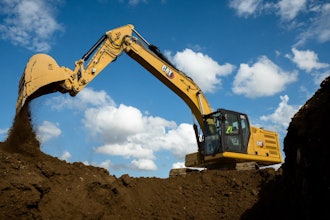
Take 50- to 70-ton excavators, for example. Washington has some that range from 14,000 hours up to around 25,000 hours on longer-term projects. Front shovels and mining excavators run longer — up to 60,000 hours.

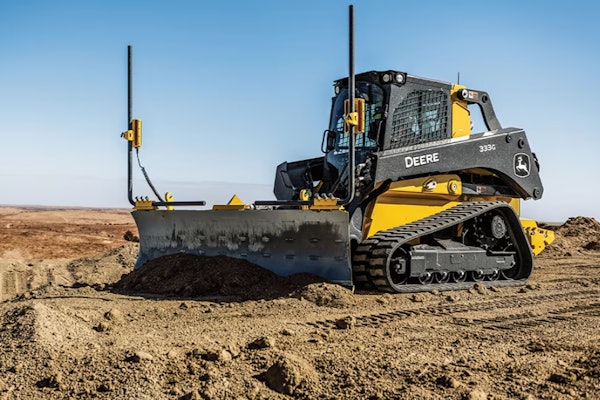
How about dozers? “Typically we try to get rid of the less-than-300 horsepower class at about 10,000 to 12,000 hours; the 300- to 500-hp class in 20,000 hours and the above-500-hp class in 50,000 hours,” Merritt says. “Even at those hours, that’s longer than most people run them.”

Washington Division will do a major rebuild at 12,000 to 14,000 hours on a construction dozer. That means the complete power train gets rebuilt components — engine, transmission, torque converter and final drives.

Why keep equipment longer? “If it adds value we do it,” Merritt says. “In the last few years, until the downturn, it’s been difficult to get the equipment we needed. The low availability of new and used equipment made the price go up. Now with the change of the economy, lots of equipment in the smaller to medium-sized classes is currently available.”

Scarce capital

Capital for new equipment is very limited and profit margins are tighter than ever at American Infrastructure, says Mike Monnot, vice president of equipment for the Worcester, Pa.,-based construction company. The firm owns about 700 pieces of rolling stock and 350 on-road trucks. “So unfortunately, yes, we’re keeping equipment longer than we would like to,” Monnot says.

To run typical construction equipment beyond 10,000 hours is to gamble that you won’t have a catastrophic component failure, Monnot says. If you do get the major component failure, you have to repair it, because you can’t sell it in a failed condition. Then the other components still have the potential for failure. And the equipment’s technology becomes obsolete.

“So if a company makes a decision to keep the equipment longer, the only option that you really have is to do planned, predictive maintenance and schedule components to be changed out at intervals,” Monnot says.

“Through scheduled maintenance we’ve gotten as many as four life cycles, or 24,000-plus hours, out of large wheel loaders,” Monnot says. The wheel loaders work for a subsidiary called Independent Construction Materials, which runs asphalt plants. Monnot recommends getting expected component lives from the manufacturers, then watching all indicators of wear — oil samples, vibration analysis, wear measurements and the like. “You come as close to that end of life as you can,” he says.

In better economic times, Monnot likes to keep a newer fleet. “Typically I prefer to cycle equipment out at the end of its first life in construction, and in mining, maybe the second life,” Monnot says. “Beyond that, I would rotate it out and exchange it for new machines.”

X4

Oldcastle Materials uses the equipment module in Viewpoint software to help manage the maintenance schedules on its equipment.

K-Five Construction Corp. is not keeping equipment any longer than usual because of the economic downturn, says Dave Gorski, shop administrator for the Lemont, Ill.-based paving contractor. He says last year wasn’t a bad year, but there doesn’t look to be much work for the current year.

“We have a 20 to 25-year replacement plan that calls for replacing everything sooner or later, and it’s tied to an annual capital budget,” Gorski says. “We own more than 600 pieces of on- and off-road equipment. Our replacement plan is done by years, so our replacements are pretty predictable and we aim to keep our capital spending on an even keel. But we do tweak the plan here and there based on factors like the volume of work we have or what the EPA is doing to us in terms of emission requirements.”

View Full Article
comments powered by Disqus
advertisement
advertisement
advertisement