Highway Contractor: Open for bids

This service works well for commonplace equipment types and makes, be they Case 580 backhoe loaders or John Deere 724 wheel loaders or Komatsu PC300 excavators, all examples of machines that are operated in most if not all applications and geographical markets. And later-model gear is bringing very good money right now,” says Hendrix.

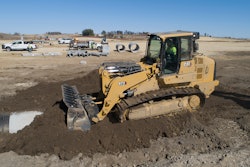
As part of a giant Featured Auction held March 25-26, six-digit sales were literally jumping off computer screens worldwide. A 2007 Komatsu PC400LC-7E0 excavator based in Maryland drew 54 bids over 16 minutes, before selling for $170,000 to a bidder in Quebec. A 2006 model of the same machine, based in Georgia, sold for $122,000 to a buyer in the United Arab Emirates. Four 2007 Caterpillar 345C L excavators based in Ohio sold for $152,000, $168,000 $162,000 and $168,000 respectively: three went to Tennessee; the other, one of the two top money draws, to Colombia in South America.

If the asset’s “clean and ready to sell,” the process from the seller contracting IronPlanet to that seller receiving his money for the asset runs 45-55 days. This includes equipment inspection, processing, report uploading and posting for usually at least two weeks of online previewing, actual auction day, and then payment within two weeks of sale.


“We allow you the flexibility of putting out a piece on your timetable instead of forcing you to dance to our music.”

Iron Planet’s Paul Hendrix

Particularly for but not restricted to more specialized equipment types, such as curb-and-gutter pavers, material transfer vehicles and crushing plants, the Daily Auction route is an alternative IronPlanet has offered since the early days of the Pleasanton, Cal.-based company’s arrival more than a decade ago. These pieces stay open for bids for week-long intervals, and the seller has the right to place a reserve bid. If the reserves aren’t met or beaten, these pieces don’t sell. “They have a smaller community of buyers typically and they have a very high initial cost, so it tends to make the owners a lot more nervous about the outcome of the auction,” says Hendrix.

Daily Auction pieces will often reappear, having not met their reserve bid the first time around. With Daily Auctions, the amount of time a piece is on the IronPlanet site and available for bids allows the seller to leverage both the site’s traffic and members of IronPlanet’s inside sales group, who will notify potential buyers based on past bidding activity. Sometimes, an item that starts out for bids in Daily Auctions, yet did not hit the reserve level, will find its way into a Featured Auction. “They’ve run it in the Daily Auction for a period of time and didn’t get enough activity, and they were motivated to sale,” explains Hendrix. “They’ve been watching our Featured Auctions. And, ‘With the traffic you guys are getting , with the number of viewers you are getting, I’m just going to roll the dice and put it in there anyway and take what it gets.’ ”

And traffic these days is good. When the last piece was sold in the April 1 Featured Auction, the attendee counter had hit 10,744. A week earlier, on the opening day of the two-day sale, the count was 14,432.

For Ritchie Bros., which has often held multi-day auctions, a new service being introduced strategically and methodically at locations throughout the world will make two- and three-day events much rarer in the future … and, says Blake, make more efficient use of time for already overworked equipment owners and managers. Typically small pieces including attachments and parts, items in the new Timed Auction are available for bids throughout the day of the live auction, while the big rolling iron still chugs across the Ritchie ramp to the barks of the company’s renowned blazer-donning ringmeisters. “The Timed Auction piece is not live-called,” says Blake, “but is still sold unreserved and it is still on the site so attendees can inspect and test it.”

Strength in a down market

In 2009, Ritchie Bros. Auctioneers held strong at about $3.5 billion in transactions, despite a down equipment market. The company’s bottom line was up about 8 percent. What that says to Blake is that, “ultimately, people will always flow to the most efficient channel to get them what they need.”

And just how big is Ritchie Bros.? This one single company, peddling used iron, alone moves $3.5 billion among the $100 billion in transactions globally in construction, mining, material handling, transportation and agricultural equipment. That $100 billion represents all equipment, new and otherwise, moved by manufacturers and dealers throughout the world. And, to think, the auction house is traditionally considered the strange, weak little nephew to the dealership!

“A lot of the larger contractors I’ve known over the years really viewed the auction channel as sort of a last resort for dispersal,” says IronPlanet’s Hendrix. “They’d park their retired stuff out on a busy road somewhere. They’d clean it up, park it out there, and would try to retail it themselves locally and regionally. They would allow their equipment superintendent to manage that thing … and that guy would have to deal with the tire-kickers and all the headaches involved with that.

“You’ve got retail pricing, you’ve got wholesale pricing, and then there’s something in the middle. What they’re trying to do is get up from wholesale pricing – or what they consider to be auction pricing – and get closer to the retail numbers. They hope that they can do it, or they think that they can do it, by remarketing the piece themselves,” explains Hendrix. “And I can tell you that some of them have more success than others, because they’ve got a reputation in the industry for maintaining those machines throughout their life cycle and they produce a product that, when it comes out and is retired, it is better than average.

View Full Article
comments powered by Disqus
advertisement
advertisement
advertisement