



Highway Contractor
Better Roads Staff
How Chicago DOT Deals with the New Budget Realities
The Mission: Manage more than 6,000 miles of roads and alleys with less money and be greener about it.
The solution: Innovate and change.
The Great Recession has wreaked havoc in road management programs all over America, but it has also encouraged road professionals to re-evaluate traditional practices and replace some of them with more innovative, cost-effective solutions.

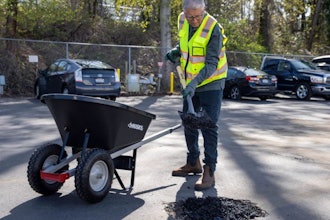
One of Chicago DOT’s in-house crews places a high-recycle-content surface lift that includes rubber-modified liquid asphalt cement.
Road departments for small- and medium- sized cities and counties have been on the leading edge of this trend, their size and closeness to the citizenry making possible quicker, nimble reactions to changing economic tides.
But large and very large departments are changing, too, and the Chicago Department of Transportation is an excellent case in point.
In a city with a reputation for machine politics, change is in the air and it’s being felt in the Chicago DOT. The impetus for change comes from the city’s new mayor, former Obama Administration Chief of Staff Rahm Emanuel, as well as the rigors of the recession.
The city’s department of transportation manages more than 4,000 centerline miles of streets, plus 2,100 miles of alleys and more than 7,400 miles of sidewalks.
“Our directive is to stretch our budget and be environmentally friendly,” Chicago DOT Commissioner Gabe Klein told Better Roads at the site of a demonstration project last fall. “We’re not afraid to try new things.”
And indeed, the department is trying new things.
Investigating techno-solutions
Chicago DOT is looking for new cost efficiencies in the field and in the administration of contracts, says Quality Assurance Manager Cindy Williams, a department spokeswoman on pavement issues. She notes that the department wants to make a substantial upgrade in its pavement management system — without the financial pain of investing in a new, customized system.
“We’re reaching out to the Cook County Highway Department to see if we can adapt their systems,” says Williams. “We need a better system for asset management, one that lets us better track pavement age and condition, and helps us identify maintenance windows.”
Illinois’ Cook County takes in all of Chicago and dozens of close in suburbs as well as unincorporated areas. The county has its own vast network of roads and rights of way to maintain. Chicago Mayor Emanuel and Cook County Board President Toni Preckwinckle are looking for synergies between the two government entities, says Williams, and the County’s pavement management system may be one of them.
New pavement approaches
At the tactical level, the city is stretching its pavement management budget by changing the mill-and-fill specification for its 2012 arterial resurfacing program.
MORE FROM Highway Contractor
MORE STORIES
POPULAR
COLUMNS
BLOGS
- Sydney uses water curtains to alert drivers to stop (VIDEO)823 Views
- Obama signs memorandum to expedite infrastructure projects635 Views
- Florida’s Red Light Camera Game: G R E E N orange R E D345 Views
- Fifty cents on the dollar for Illinois roads274 Views
- Acceptance of connected vehicles depends on cost, LaHood says259 Views