
Highway Contractor
Better Roads Staff
Best Outcome Solutions
Every manager we interview emphasizes longer-lasting solutions as part of their agency’s urban road strategy today, though the tactics employed by each agency varied according to local needs and priorities.
For Ron Ditmars in Overland Park, Kan., the single most cost-effective pavement intervention is crack sealing. Ditmars is supervisor of public works maintenance for the city, which is part of the greater Kansas City metropolitan area and has a population of about 173,000.
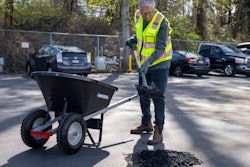
“With revenue trends like they are, we’re focusing on maintenance technologies that cost the least and give the most return,” says Ditmars. The city’s maintenance priorities, he says, are crack sealing, milling and paving patches, and repairing base failures. In-house crews tend to the crack sealing and patching, and some of the base failures, while larger base repairs and milling and paving work are contracted out.
“We’re still evaluating which surface treatments give us the best return,” says Ditmars. The city has employed a variety of preventive maintenance interventions over the past decade, including microsurfacing, some chip seal and some slurry seals, in addition to conventional overlays. “We’ve been using a combination of overlays on a 28-year cycle with surface treatments every seven years,” says Ditmars. “If funds get really tight, we might have to push some of the surface treatments to eight years.”
Overland Park classifies its roads in three categories: residential, collectors and thoroughfares. The thoroughfares, says Ditmars, get milling and overlay interventions on a shorter cycle – 10 years or more – with microsurfacing treatments following five or six years later. Chip seals are not used on thoroughfares.
The city has been experimenting with several surface treatment options. A rejuvenating oil to treat aging surface asphalt has gotten negative public reception due to material being tracked into homes. The city is using different stone and oil combinations for its microsurfacing mixes, and officials there are looking at options like crumb rubber, river rock and hadite to either lower costs or extend service, or both.
Ditmars says the city also gives high priority to drainage for its streets, because water in the pavement can create expensive damage and safety problems. “One of our most important missions is to keep the underdrains open on some of our thoroughfares so the medians can drain properly,” says Ditmars. Similarly, when city crews repair failed bases, water is often the source of the problem, so they install underdrains as part of the repair.
Ground Failure Before Pavement Failure
For Mike Coffey, Alaska DOT maintenance and operations engineer, and his Fairbanks counterpart, Steve Potter, their state presents a set of road management problems that range from the unique to the nearly bizarre, but they have one thing in common with road managers everywhere: “We face higher expectations from the public every year,” says Coffey.
“The public wants a higher level of service and we try to provide that from a budget that generally doesn’t grow as fast as expectations.”
Because Alaska is a massive state with a small population, its transportation structure is different than other states. It derives a higher percentage of its road budget from federal funds, and the state DOT works more directly with city and local roads than in other states.
“We’re doing more with less, like everyone else,” says Coffey, of Alaska DOT. “In the old days we might have had three trucks and a grader on a job, now it’s one truck and a grader. All the trucks have attachments like front plows, belly blades, and sanders so they can do multiple tasks.”
Coffey says the agency has reduced its inventory of specialized equipment, in some cases by renting, and in other by replacing specialized machines with multi-use units.
As in other places, safety problems trump all other priorities, even in this tight budget era. In the Fairbanks area, the state has recently invested in a salt-brining system to deal with a changing climate that makes the fall to winter transition longer, with more freeze-thaw cycles. Coffey says the transition begins in October and often includes heavy and freezing rains, in addition to traditional winter weather.
MORE FROM Featured Articles
MORE STORIES
POPULAR
COLUMNS
BLOGS
- Rand Paul introduces bill to fund emergency transportation projects475 Views
- Sydney uses water curtains to alert drivers to stop (VIDEO)475 Views
- Tesla Model S earns top ratings from Consumer Reports428 Views
- Big four cellphone companies jointly launch anti-texting campaign261 Views
- Acceptance of connected vehicles depends on cost, LaHood says256 Views