

Feature Story
Better Roads Staff
“Ultimately,” he added, “the new standards may encourage better stewardship of public resources . . . By reporting the value of public assets over time, governmental agencies will make their improvements – or lack of improvements – in public assets more apparent.”
Maze’s assessment seems to be coming true. The process, and the numbers it produces, makes it easier for agencies to communicate with elected officials and citizens about the road needs and priorities. And it has already dramatically changed how roads are managed, particularly among the early adaptors like the Hillsborough County Public Works Department.
Building a System
“It has taken 10 years to get this far,” Roger Cox told Better Roads. He started building the county’s pavement database in 2002 and they have maintained it ever since.
“A complete inventory of roads, a full assessment of pavement health, that’s the only way,” said Cox. “We organize them into primary, secondary and tertiary roads, then define the pavement’s health, section by section, and overall.”
In determining budget priorities, Cox says the first question is, “Where does the system have pain?” The next step is to determine the best treatment for each problem. Hillsborough’s sophisticated management system lets the department project the consequences of each treatment choice – not only for the specific project, but also for the overall system.
System consequences are always important in this new management paradigm, and acutely so in times of lean budgets.
Hillsborough County’s Fiscal Year 2010 road budget is half the previous year’s spending level, partly because a special program is winding down and partly due to sagging real estate tax revenues. The resulting strategy from the Public Works department is to focus on the most important roads.
“The arterials have a different, more rapid deterioration rate than local roads because they carry more traffic,” explains Cox. Financial models demand that these pavements get timely interventions; if they slide into a condition that requires expensive rehabilitation, the whole system suffers.
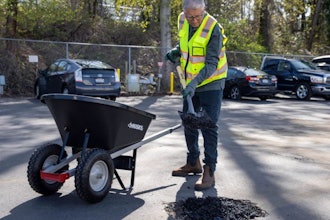
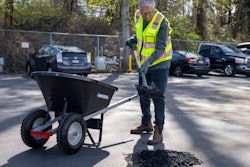
“Secondary roads deteriorate at a slower rate,” says Cox. “We can use low-cost treatments like crack sealing and pothole patching to maintain these pavements at a satisfactory level when dollars are tight.”
What about complaints from citizens?
“Complaints and politics are a fact of life,” says Cox. “But the system lets us show people that their street is on our radar and waiting for its logical turn. People are pretty understanding when they see we know what we’re doing and that we are aware of them.”
State Agencies
In 1997, some four years before GASB 34 began phasing in, the Nevada Department of Transportation implemented one of the nation’s most effective pavement management systems.
Sohila Bemanian, then a principle pavement engineer with NDOT and a primary architect of the system, called it a pavement management system based on financial consequences.
MORE FROM Featured Articles
MORE STORIES
POPULAR
COLUMNS
BLOGS
- Obama signs memorandum to expedite infrastructure projects666 Views
- Florida’s Red Light Camera Game: G R E E N orange R E D392 Views
- Sydney uses water curtains to alert drivers to stop (VIDEO)389 Views
- Seattle tests bikes as disaster relief (VIDEO)330 Views
- FHWA deploys bridge-inspecting robots295 Views