

Feature Article: Trucks of Tomorrow

Well, next month actually.


After New Year’s Day, if you buy a new truck you’ll have to choose between one of two new engine systems.


The two distinct technologies have emerged to meet the Environmental Protection Agency’s diesel 2010 emissions requirements in the United States: Exhaust Gas Recirculation (EGR )and Selective Catalytic Reduction, (SCR).


At the end of what has been a long, strange, 10–year trip, Navistar is the only North American engine manufacturer which will offer fleets an “EGR only” approach in 2010. All other OEMs – including Cummins, Detroit Diesel, Isuzu, Mack, Mercedes-Benz and Volvo will use SCR systems. SCR is an additional emissions control system that will be mounted on heavy duty trucks next year to reduce emissions in diesel exhaust after the engine’s EGR system has done its work to the soot and NOx produced in the engine.


As a vocational truck owner, these changes will dramatically impact the way you spec and maintain your vehicles. Acquisition costs will increase regardless of which technology you opt to go with. But other variables will come into play as well, for trucks ranging from Class 3 up to Class 8: Some trucks will see an increase in gross vehicle weight. SCR technology will require the purchase of a new, mandatory diesel exhaust fluid (DEF).

And careful consideration will have to be given to the placement of these components on trucks engaged in severe, off-highway applications. Still, both proponents of SCR and EGR technology insist their emissions solutions will not only work, but excel in tough, construction applications..


Even casual trucking industry observers have surely noted the war of words that has erupted between EGR and SCR proponents. Navistar has ridiculed SCR technology as “stop-gap” in nature, adding additional weight to truck chassis, adding to driver responsibilities by requiring them to fill an additional DEF tank and charging that DEF itself is a toxic, hazardous substance.

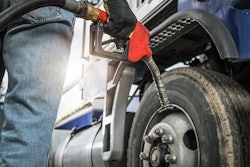
In response, SCR engine manufacturers have noted that DEF has been used successfully in industrial applications and on European trucks for years without issue. In addition, SCR proponents say, their new technology will boost Class 8 fuel economy and argue it is simply impossible to meet EPA ’10 regulations using EGR alone and insist Navistar would be unable to do so without cashing in EPA credits.

Navistar actually filed a lawsuit in Federal court arguing that SCR on-board diagnostic systems that de-rate a truck’s power and performance as an inducement to refill an empty DEF tank allow the trucks to run in violation of the EPA ’10 and should therefore be ruled in violation of those regulations.


“SCR isn’t voodoo,” says Dave McKenna, director of powertrain sales and marketing for Mack Trucks. “SCR technology has been around since 1957 in commercial and industrial applications. It’s a simple means of removing NOx from our atmosphere.”


As exhaust gases leave the engine, but before they exit a truck’s exhaust pipe, they flow through a catalytic converter where they are sprayed with a solution of 67.5 percent deionized water and 32.5 percent urea. When the super-hot NOx combines with the urea in this solution (DEF), it chemically converts into environmentally harmless water and nitrogen.

“SCR isn’t voodoo. SCR technology has been around since 1957 in commercial and industrial applications.”

— Dave McKenna, director powertrain sales and marketing for Mack Trucks

View Full Article
comments powered by Disqus
advertisement
advertisement
advertisement