

Feature Article: The coming hangover

Christina Romer, chair of the Council of Economic Advisers said in the council’s “Economic Report of the President for 2010” that ARRA, overall, had been, “the great unsung hero of the past year. It has provided a tax cut to 95 percent of America’s working families and thousands of small businesses.” The Council of Economic Advisers, an agency within the Executive Office of the President, is charged with offering the President objective economic advice on the formulation of both domestic and international economic policy.

“It has meant the difference between hanging on and destitution for millions of unemployed workers who had exhausted their conventional unemployment insurance benefits,” said the council’s report. “It has kept hundreds of thousands of teachers, police, and firefighters employed by helping to fill the yawning hole in state and local budgets. And, it has made crucial long-run investments in our country’s infrastructure and jump-started the transition to the clean energy economy. All told, the Recovery Act has saved or created some 1½ to 2 million jobs so far, and is on track to have raised employment relative to what it otherwise would have been by 3.5 million by the end of this year. When the political rancor of the moment passes and dispassionate analysis is done by experts, I have no doubt that the American Recovery and Reinvestment Act of 2009 will be viewed as one of the great triumphs of timely, effective, countercyclical macroeconomic policy—just exactly the type of policy the Employment Act of 1946 was designed to facilitate.”

Whatever happens, says FMI, “highway contractors will likely face continued volume and profit slumps as well as sharp competition in the coming years.” Searching for a silver lining, the consultant company says “challenging economics provide the opportunity for companies to reconsider their firm’s organization and focus. Restructuring may include taking on activities such as consolidating operations, reducing overhead, replacing executives and applying traditional company strengths on emerging markets or acquiring firms that complement existing construction capabilities. A reduction in backlog drives companies to innovate and create new business opportunities and partnerships that provide work they never would have realized otherwise.” v


AASHTO’s one year review of ARRA: The basics.

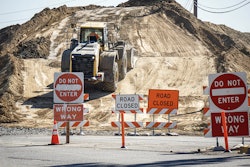
On February 17, 2009, the American Reinvestment and Recovery Act was signed into law, releasing $48 billion to jumpstart the nation’s flagging economy and rebuild our aging transportation systems. One year later, state transportation departments have set an amazing record of speed and efficiency, providing tens of thousands of jobs and billions in paychecks to American workers.

Within 11 months of funding:

• More than 7,000 highway projects are under construction and nearly 2,000 are completed;

• Improvements are being made to more than 24,000 miles of highway and more than 1,100 bridges;

• 700 transit projects have been approved, from new buses to track repair and new transit centers; and

• Transportation construction was up more than five percent than in the previous year, with 70 percent of transportation construction firms receiving ARRA contracts.

States have proven their commitment. Examples from every state offer a look at what has been accomplished. Projects of every size and description have been created – providing long-lasting results that have already:

• Upgraded aging bridges and highways

• Improved safety

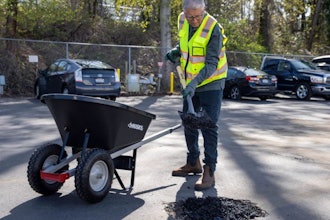
• Reduced potholes and road hazards

• Reduced congestion and improved traffic flows

• Expanded options for bicyclists, pedestrians and transit users

• Enhanced the environment.


From the AASHTO report “Projects and Paychecks: A One Year Report on State Transportation Success under the American Recovery and Reinvestment Act

View Full Article
comments powered by Disqus
advertisement
advertisement
advertisement