
Feature Article: The coming hangover

cliffDoes the road up Stimulus Mountain dead end at a cliff?

By John Latta


The Federal Highway Administration says in January that it had authorized $23 billion in projects under the year-old American Recovery and Reinvestment Act (ARRA). The agency says that almost $5.6 billion in stimulus funds has been sent to states to repay them for materials and labor on highways and bridges. FHWA also says it is working to get $15 billion in projects currently under construction underway.

The American Association of State Highway and Transportation Officials (AASHTO) says more than 12,250 transportation projects are underway as a result of stimulus funding. According to AASHTO, state DOTs have “set an amazing record of speed and efficiency” in putting stimulus dollars to work. In doing so states have stretched the funds far further than either Washington or state capitals expected them to go. “With bids running as low as 30 percent below estimate,” says an AASHTO study called Projects and Paychecks, “states stretched federal dollars even further, creating more jobs and more miles of improvements. California, Georgia and Texas awarded more than 90 percent of their highway contracts below original cost estimates.”

The Projects and Paychecks report says as of January 7 a total of 1,125 bridges had been improved or replaced, 21,400 miles of pavement had been resurfaced or widened and 1,700 safety traffic management projects had been put in place using stimulus funds.

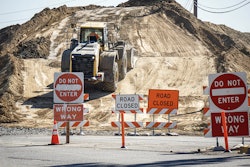
Secretary of Transportation Ray LaHood has blasted criticism that the administration’s economic stimulus package was ineffective. “The stories that have been written that it hasn’t created jobs is baloney,” LaHood said. Recalling visits to ARRA-funded construction sites he bristled, “I see orange cones and orange barrels all over your communities.”

“Projects and Paychecks proves just how big a role stimulus is playing to keep Americans working,” said John Horsley, AASHTO executive director. “In January, state DOTs identified more than 9,800 additional ‘ready-to-go’ projects worth $79 billion. Congress needs to move quickly to pass another Jobs Bill. This study proves transportation projects can deliver hundreds of thousands of jobs for America,” Horsley said.

But money from ARRA will run out or largely be exhausted by the end of this year. States are facing a worrying few months because without help from Washington the end of those funds could trigger more disturbing budget cuts.

Construction industry management consultants and investment bankers FMI says “most ARRA funds were viewed by state governments as fiscal relief, and implemented as a stop gap measure resulting in artificial inflation of highway construction spending set to rapidly deflate in later 2010 and 2011. The coming hangover as funds dry up will be exacerbated by completion in 2010 of the bulk of ARRA-sponsored transportation projects, increased state budget deficits, the delayed passage of a new federal highway bill and the continued slow economic recovery.”

Without congressional intervention, FMI “foresees a dramatic drop-off in highway construction spending and other infrastructure-type projects once the stimulus wave passes.”


“ARRA, overall, had been, the great unsung hero of the past year.”

— Christina Romer, Chair of the Council of Economic Advisers


Affected projects would not just be jobs paid for with stimulus funds. ARRA funds did not apply to local roadways, but states were able to use those funds for big projects they might otherwise have paid for and then use the freed-up local funds for such road work. But any federal money destined for big or small roads, including ARRA funds, takes time to reach state coffers, and because of this built-in delay, according to FMI, “lengthier projects are overlooked in favor of short-term projects for which funds can be captured quickly. The real effect is that ARRA had been used as a crutch to perform vital upgrades and state financial woes merely postponed until tomorrow.”

Without ARRA then, state budget deficits could rise radically and quickly.

Recovery-Act“Unfortunately, big state deficits are expected to continue through state fiscal year 2012 — that is, for another 18 months or so after 2010 ends, “according to the Center on Budget and Policy Priorities.“ If states do not receive additional federal assistance beyond the scheduled expiration of such aid, they will be forced to institute further deep budget cuts and/or substantial tax increases.” States must plan now for that uncertain future.

The Center worries that about this immediate scenario:

States are taking steps now to plan their budgets for state fiscal year 2011, which starts on July 1, 2010 in most states. Governors will send their budget proposals to their legislatures between next month and February 2010 in almost all states. The legislatures will have to pass budgets as early as March or April in some states and by the end of June in almost all states. If states do not know they will receive additional federal fiscal relief, they will begin implementing new budget cuts and tax increases by this summer, at the latest.

estimatedARRA money has limited, to varying degrees, state budget cuts. But once the cutting picks up and is accompanied by layoffs, tax increases, higher fuel excises, the measures used to try and balance state budgets become themselves drags on economic recovery.

View Full Article
comments powered by Disqus
advertisement
advertisement
advertisement