

Asphalt Recycling Section
Better Roads Staff
CIR plus microsurfacing get the job done
Cold-in-place recycling (CIR) followed by microsurfacing was not only a cost-effective treatment for Los Angeles County when it encountered unstable pavement conditions in one of its roads, but CIR was the perfect green solution.
At issue is Upper Big Tujunga Road, a 9.5-mile, two-lane mountain road in a remote location in the Angeles National Forest. The CIR treatment, going 3 inches deep, followed by microsurfacing, cost the county approximately $750,000.
The LA County Department of Public Works encountered problems with the road when it applied a chip seal in October 2010. The U.S. Forest Service required that the preservation work be done late in the year. “With cooler weather, it was not an optimal time to apply the cationic high-float emulsion with 5/16-inch chips,” says Imelda Diaz, Civil Engineer with the County. Upon initial placement of the chip seal, some of the chips raveled off, so the County raised the amount of emulsion, applying up to double the amount specified at first. That seemed to have solved the problem.
Then in April 2011, the Los Angeles area encountered a period of hot weather. “The pavement started moving; it became soft and gummy,” says Diaz. “The emulsion in the chip seal may not have fully reacted when it was first placed in the cooler months of October and November, and remained dormant through the winter. Then in April when we got that hot spell, the heat seemed to have activated the emulsion in the chip seal. So essentially it was like rock floating in the emulsion.”
Now the road was unsafe, especially for motorcycles. So the County closed Upper Big Tujunga Road for a time, and sought answers from contractors and suppliers in the area. It turned out that Pavement Recycling Systems (PRS) was doing some cold-in-place recycling work on the nearby Angeles Forest Highway.
“So essentially it was like rock floating in the emulsion”
- Imelda Diaz, LA County DPW
“That got us thinking, ‘What if we used cold-in-place recycling to fix this problem on Upper Big T?’” recalls Diaz. “We wouldn’t have to haul in new materials, and if we could recycle what is there, that’s more viable than trying to remove everything and replace it with hot mix. Because most CIR treatments require a wearing surface, microsurfacing seemed like the best alternative.”
So the county consulted with Pavement Recycling Systems and with Doug Ford, President of Pavement Coatings (PCC), a Jurupa Valley, Calif., company that performs microsurfacing. The CIR work was then performed by PRS and the microsurfacing was performed by PCC as subcontractors to Torres Construction.

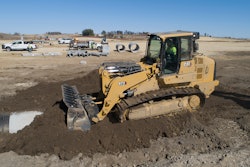
The cold-in-place recycling train features a milling machine followed by a recycler, which crushes the RAP, screens it, mixes it with emulsion and lays the material down in a windrow.
Only about half of Upper Big Tujunga required CIR work – 9 lane miles to be exact. The CIR was only needed on the half with excess asphalt on the road. “The high asphalt content on the road was initially a danger, and then it became an asset,” said Doug Ford. “With the cold-in-place recycling we ran 1.6 percent emulsion, but without that additional asphalt we would have run 2.5 percent or more of emulsion.”
The CIR Train
“Leading off the CIR train was a Caterpillar PR 1000 milling machine, working 3 inches deep and 12.5 feet wide. The mill conveyed the material back to a recycler, which has screens and a crusher to reduce all recycled asphalt to 1-inch-minus,” says Chris Rogers, Superintendent for Pavement Recycling Systems. “When the material has been sized to specification, it passes over a belt scale that weighs it before the asphalt hits a pug mill.