Applications & Innovations

Better Roads Staff

For working on surfaces where tire punctures can become a problem, you could also consider buying a set of poly-fill tires. “This will eliminate the downtime associated with a flat tire while maintaining the ride characteristics of a pneumatic tire,” Fitzgerald says.


Cost Comparison

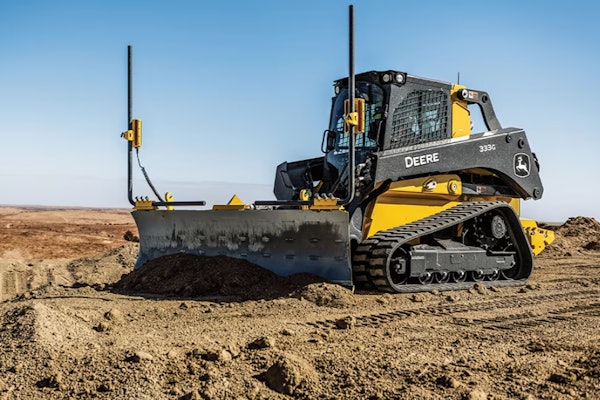
The biggest deterrent for many contractors with a tracked machine is the dollar amount, something manufacturers have tried to combat with longer track life, performance increases and undercarriage suspension systems for smoother rides. Figuring out the breaking point between productivity and cost for both the tire and track is key when choosing between the two.

Skid-steer loaders have a lower initial cost for the same size machine and lower owning-and-operating costs because the tires cost far less than the rubber tracks. A set of skid-steer tires can cost between $600 and $1,000 and last 600 to 1,000 hours. Rubber tracks cost $3,000 to $4,500 per set and last 1,200 to 1,600 hours. With proper operation of the loader, rubber tracks should last about twice as long as tires. However, tires still cost considerably less than tracks, Fitzgerald says.

Overall, tracks are more expensive to maintain than wheels, so the cost of the equipment can also come into play,” he says.

Although tire costs for skid steers are often lower than the hourly cost of tracks for CTLs, the downtime and risk of downtime to replace tires or fix flats is greater with skid steers. That is why many high-production applications have moved to using only solid tires for their skid steers.

“The most important maintenance cost item on either is rubber – tires for skid steers and tracks for compact track loaders,” O’Brien says. “Generally, the cost of keeping the machine fitted with tracks is more than with skid steers, but it depends on the applications, underfoot surfaces and especially operator techniques that will impact these costs.” (See “Reduce Downtime” sidebar for proper operation and maintenance techniques.)

Wright says a CTL can pay for itself in as little as 18 months, if all goes well. “Don’t sacrifice just to save a dollar,” Wright tells Equipment World. “Always buy quality; a loader and attachment need to be durable and reliable because downtime is expensive. Be sure to select equipment that makes the most sense for the applications it’ll be used in.” He recommends customers choose a machine that will equate to 85 or 90 percent of their needs.

Best of Both Worlds

For skid steer owners who occasionally work in rough, rocky or muddy conditions, a set of over-the-tire tracks may be an alternative to purchasing or renting a compact-track loader.

“Skid-steer loaders are better for mobility on hard or consistent surfaces but can be fitted with track chains temporarily for better flotation and mobility for muddy or wet surfaces, or to reduce damage to turf for landscaping or tree planting applications,” O’Brien says.

But operators will still want to be mindful of the type of surfaces they will be covering with the equipment. “Over-the-tire steel tracks can add productivity to existing equipment, but they can also damage sidewalks and curbs,” Fitzgerald says. “You want to use rubber tracks in areas under development, which have improved surfaces, and use steel tracks in areas that are primarily dirt or new construction.”

Tracks can typically be installed in 30 minutes and removed in about 10 minutes. They range in price from $2,500 to $5,000 depending on the machine model, track width and length.


Make a Decision

With each having its pros and cons, it is important for roadbuilders to understand their project needs before deciding between wheeled or tracked equipment. There might not be a universally correct choice, but there is a right one for each contractor’s services.

And although the industry as a whole currently is leaning more toward the lower price of tires, the verdict is still out on whether the tracked-equipment market will ever equal or surpass wheeled machines. “As the construction industry continues to recover, compact-track loaders could again become as popular as skid-steer loaders because their productivity is incredible,” Wright says to Equipment World.


REDUCE DOWNTIME


Your equipment won’t get far without functional tires or tracks, so here are some maintenance tips to keeping them rolling.

View Full Article
comments powered by Disqus
advertisement
advertisement
advertisement